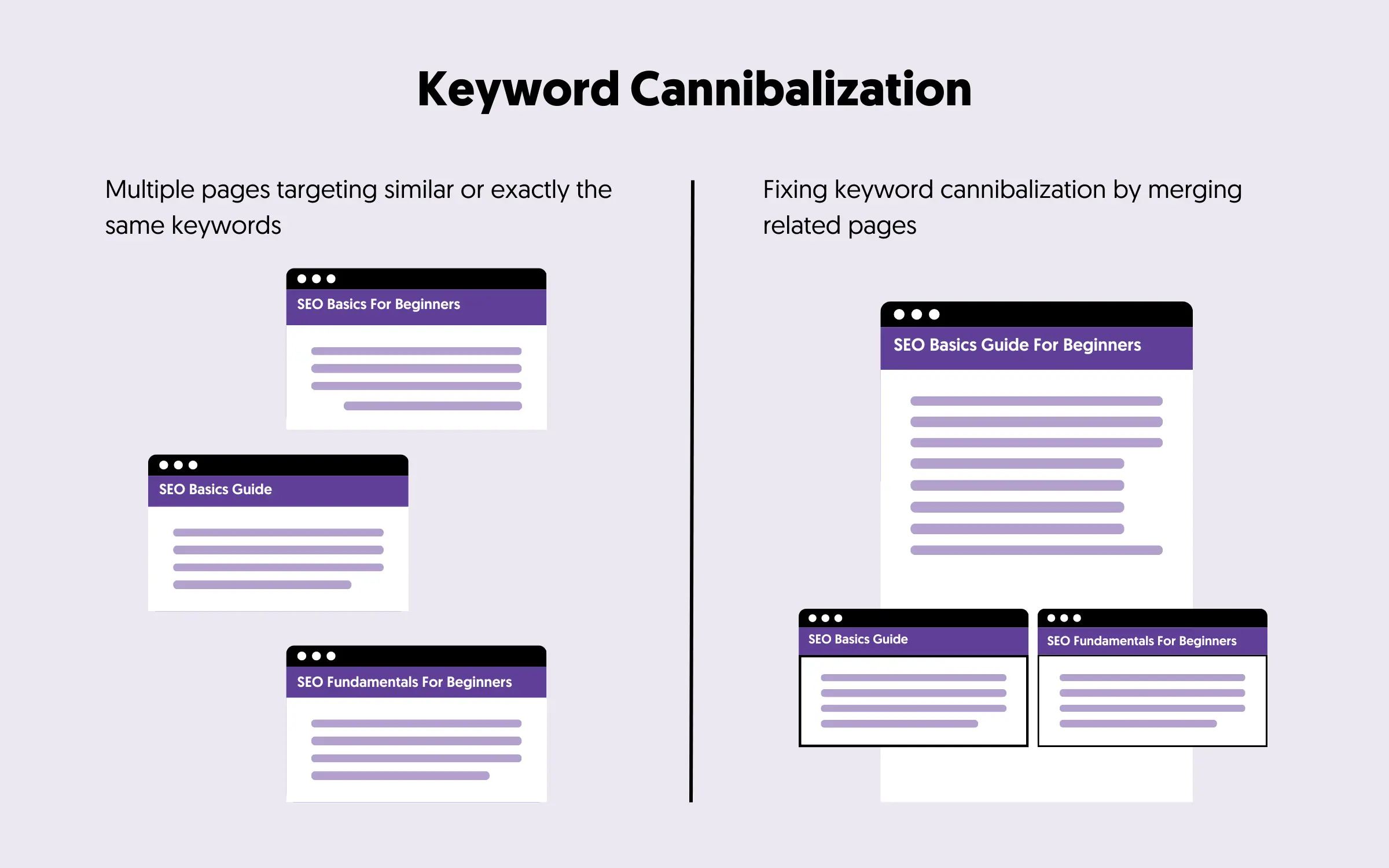
Keyword cannibalization happens when multiple pages on your website compete for the same search query. This confuses search engines about which page is most important, which ultimately hurts your rankings for all of them.
- It's often caused by multiple blog posts on similar topics or product pages targeting the exact same commercial intent keywords.
- This splits crucial SEO signals like backlinks across multiple URLs, weakening each page’s ranking potential and confusing search engine crawlers.
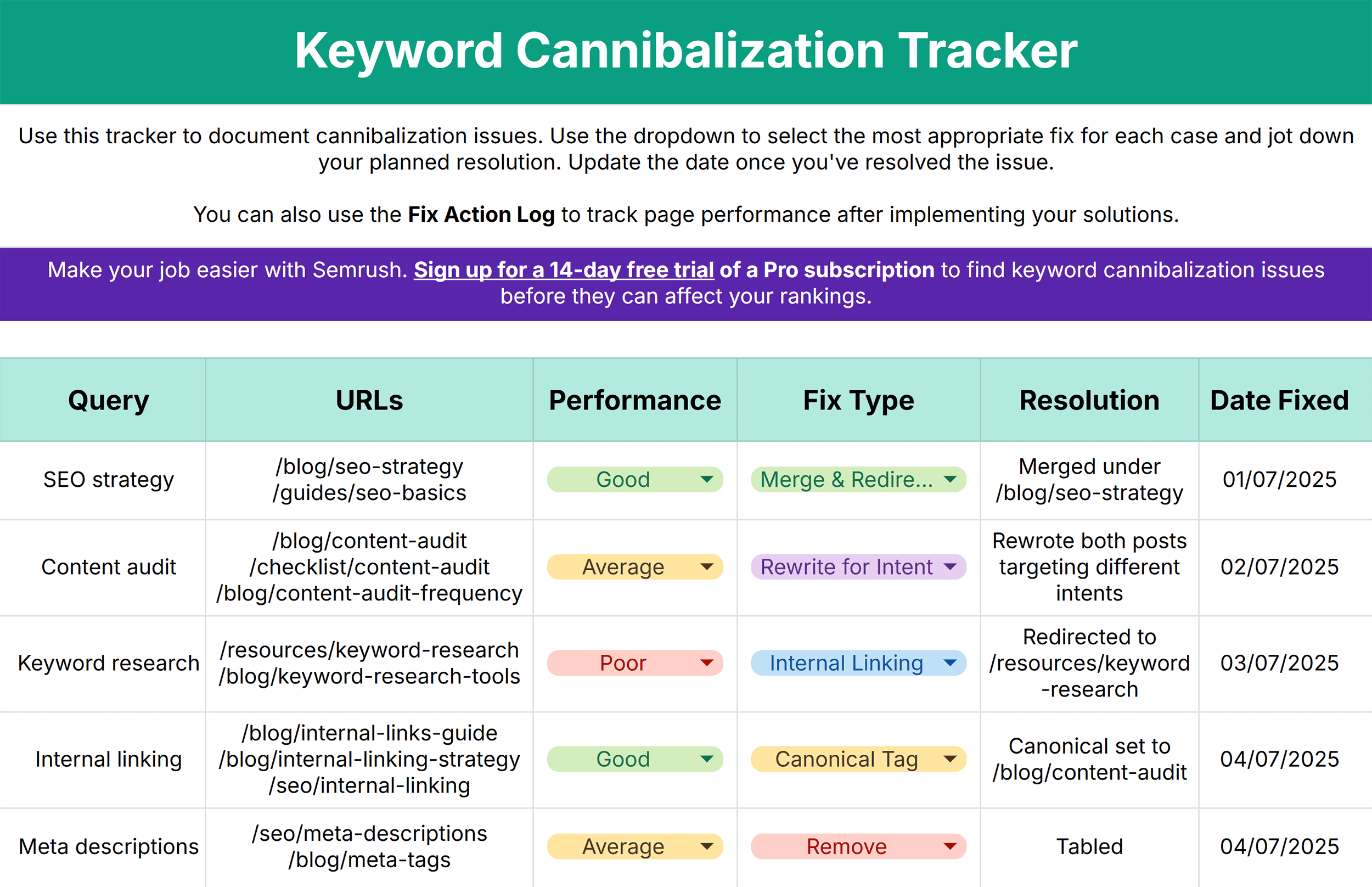
- To fix it, merge similar articles into one pillar page and use 301 redirects to consolidate all the valuable link equity.
- Alternatively, you can de-optimize less important pages by changing their keywords or using canonical tags to signal the preferred version.
Who should use this: SEO managers, content strategists, and marketing teams who need to audit their site's architecture and consolidate content to improve organic search performance.
Introduction: Are You Your Own Worst SEO Enemy?
Ever feel like you're running in place with your content? 🏃♂️ You're publishing blog posts, creating landing pages, and pushing out content across all your channels. You’re doing everything the gurus tell you to do. But for some reason, your organic traffic is stagnant, and your key search rankings just won't budge. It’s frustrating, right? You're putting in the work, but the results aren't showing up. Your Own Worst SEO
Here's the thing—the problem might not be your effort. It might be your strategy. You could be unintentionally sabotaging your own success with a common, yet sneaky, issue. The culprit? It's called Keyword Cannibalization, and it's a classic case of competing against yourself in the vast arena of SEO.
So, What is Keyword Cannibalization, Really?
Let's break it down. In simple terms, keyword cannibalization happens when you have multiple pages on your website all trying to rank for the same keyword or key phrase. Instead of creating one super-strong, authoritative page that Google can confidently show to searchers, you’re giving it several weaker, competing options. This is a recipe for confusing search engines. They look at your site and think, "Which of these pages is the best answer? I'm not sure, so I'll just rank them all a little lower."

The truth is, you're actively hurting your own SEO. Think of it like this: your website’s authority is a finite resource. When you have two or more pages targeting the same term, you split your valuable assets—like backlinks, internal links, and click-through rates—between them. This results in diluted authority, where no single page becomes strong enough to climb to the top of the search results. A study even found that content consolidation can lead to significant ranking improvements, sometimes jumping dozens of positions.
More Than Just Rankings: The Impact on Conversions
But wait, it gets worse. This isn't just a technical SEO headache; it’s a problem that has a direct impact on conversions. Let’s say you have a high-converting landing page for "AI-powered copywriting tools" and also a general blog post that mentions the same term. If the less-optimized blog post outranks your money-making landing page, you're sending valuable traffic to the wrong destination. That's a lost lead or a missed sale, all because your own pages were fighting each other. Ouch. 😬
The bottom line is that creating more content isn't always the solution. Creating *smarter* content is. This is where a strategic approach—and the right tools—makes all the difference. For instance, using a platform like Copycrafted.ai from the get-go can help prevent this mess. Its AI Keyword Research capabilities allow you to map out a content plan where each piece has a unique target. Plus, its SEO-Optimized Article Writing ensures every new article serves a distinct purpose, building a cohesive content library instead of a chaotic one.
Now, don't panic if this sounds familiar. We're not just here to diagnose the problem. In this comprehensive guide, we'll walk you through everything you need to know. You'll learn how to identify, fix, and—most importantly—prevent keyword cannibalization for good. Ready to stop fighting yourself and start winning at SEO? Let’s dive in. 👇
🗺️ Your Roadmap to Solving Keyword Cannibalization
Ever feel like you're in a race, but your biggest competitor is... yourself? It’s a frustrating spot to be in. In the world of SEO, this happens all the time. It’s called keyword cannibalization, and it's a sneaky issue where multiple pages on your own website compete for the same keyword in Google search results. The result? You’re splitting your traffic, confusing search engines, and watering down your authority. Not good.

But don't worry, we've got you. This article is your complete guide to diagnosing and fixing this common SEO headache. Think of this section as your detailed roadmap. We’ll walk you through everything you need to know, from discovery to prevention. Let's get started.
Spotting the Problem: How to Identify Keyword Cannibalization 🔍
First things first, how do you even know you have a problem? The signs can be subtle—like fluctuating rankings or a page that just won't climb past page two. We'll show you exactly how to identify keyword cannibalization. It starts with a solid SEO Audit to get a clear picture of your site's performance. We’ll cover the manual methods using Google Search Console and the automated tools for detection that can speed up the process immensely. You might be surprised by what you find hiding in your own content.
Why Me? Unpacking the Common Causes of Cannibalization 🤔
Look, this problem rarely happens on purpose. The common causes of cannibalization usually stem from an evolving Content Strategy. Maybe your team created multiple blog posts around a core topic over several years. Or perhaps your understanding of User Intent changed, leaving older pages targeting keywords that no longer perfectly match what users are looking for. It’s a natural side effect of a growing website, but one that needs to be managed proactively before it hurts your rankings.
The Fix-It Plan: Concrete Strategies to Fix the Issue 🛠️
Okay, so you've identified the culprits. Now what? The good news is there are proven strategies to fix the issue. This isn’t just about deleting pages—that’s often the worst thing you can do. We'll dive deep into Content Optimization techniques. You'll learn when to merge two weaker articles into one powerhouse pillar page, how to consolidate your Link Equity, and when a simple de-optimization of a page is the right move. When you're combining content, services that provide SEO-Optimized Article Writing, like the platform from CopyCrafted.ai, can help you create a fresh, authoritative master page without starting from scratch.
Playing the Long Game: Preventing Future Cannibalization ♟️
Fixing existing issues is great, but preventing future cannibalization is even better. It’s all about building a smarter, more organized content workflow. The foundation is a well-documented Content Strategy where every piece of content has a unique purpose and a primary keyword target. This is where modern tools really shine. Leveraging AI Keyword Research helps you map out your content universe and assign keywords to specific URLs from the get-go. Plus, for agencies and teams, solutions like CopyCrafted’s Agency Content Automation can create a single source of truth, ensuring everyone knows what’s being created and for which keyword, preventing overlaps before they even happen.
Supporting Elements
Okay, let's get into the nitty-gritty. Understanding keyword cannibalization is one thing, but spotting it and telling it apart from its evil twin, duplicate content, is another game entirely. They both send confusing signals to search engines, but they're not the same problem. Getting this right is crucial for a healthy SEO strategy. It’s the difference between a clear path for Google's crawlers and a confusing maze that hurts your rankings. 📉
Distinguishing Keyword Cannibalization from Duplicate Content
So, what's the big difference in the cannibalization vs duplicate content debate? It’s all about intent versus replication.
Duplicate Content is pretty straightforward. It’s when substantial blocks of content on your site are identical or nearly identical across different URLs. Think of a printer-friendly version of a page that gets indexed by mistake. Google generally just picks one version to show and ignores the others. It's messy, but often less damaging than cannibalization. 🧐
Keyword cannibalization, however, is more subtle. It happens when multiple pages on your site compete for the same keyword. They aren't copies of each other; they're unique pages fighting for the same spot in the SERP. You're essentially telling Google, "Hey, this page is about 'blue widgets,' but so is this one... and this one over here, too!" This confusion dilutes your authority and splits your valuable Backlinks and click-through rates. You’re not giving search engines one strong page to rank, but several weaker ones.
Keyword Cannibalization Examples in the Wild
Look, theoretical stuff is great, but let's see some real-world-style keyword cannibalization examples. Imagine you run an e-commerce site for pet supplies. You have:
- A blog post titled "The Ultimate Guide to Choosing Dog Food."
- A category page called "Premium Dog Food."
- A specific product page for "NutriPaws Grain-Free Chicken Dog Food."
If you optimize all three for the keyword "best dog food," you've created a problem. Which page should Google rank? The guide? The category? The product? A real-world case study would show all three pages bouncing in and out of the search results, with none of them gaining solid traction. Your authority gets split, and a competitor with one single, powerful page for that keyword will likely outrank all of your efforts.
The Tools and The Experts: What They Say 💡
How do you even spot this problem? This isn't just guesswork. You can use powerful SEO tools like Ahrefs or Semrush to identify which URLs are competing for the same keywords. These platforms can show you your ranking history for a specific term, revealing if multiple pages are flip-flopping in the search results. It’s a dead giveaway.
Plus, expert SEO opinions are pretty unified on this. As digital strategist Anya Sharma puts it in her Expert Quote, "Search engines are smart, but they're not mind-readers. When you give them two pages for one query, you're forcing them to guess. That's a gamble you'll usually lose." The bottom line is that a clear, structured content plan is non-negotiable.
The best strategy is prevention. Before you even start writing, you need a solid keyword map. This is where AI can be a massive help. Platforms with integrated AI Keyword Research, like the one offered by CopyCrafted.ai, can help you assign specific keywords to specific pages from the get-go. By using a tool for SEO-Optimized Article Writing, you ensure each piece of content has a unique purpose and target, eliminating cannibalization before it ever becomes a headache.
Practical Value: From Chaos to a Cohesive Content Engine
Let's be real. Does your content creation process sometimes feel like it's held together with duct tape and a prayer? 🙏 You've got ideas in one doc, keywords in a spreadsheet, drafts in another folder, and a separate tool for publishing. It’s exhausting. The reality is, a disjointed process doesn't just waste time; it kills creativity and tanks your potential ROI. What you're really after is a smooth, powerful engine—not a sputtering machine that might break down at any moment.
The goal is to move from chaotic, one-off tasks to a predictable system that delivers results. So, how do you actually build that system without hiring a whole new team?
Streamlining Your Content Workflow from Start to Finish
The first step is ditching the chaos. A fragmented Content Workflow is your biggest enemy. Juggling multiple tools for research, writing, and scheduling creates friction. Every time you switch tabs, you lose focus and momentum. This is where the concept of an all-in-one seo platform becomes a game-changer. Imagine having your entire process—from initial brainstorming to final publishing—housed in a single, intuitive dashboard.
This is exactly what streamlined content production looks like. It’s less about managing tools and more about creating great content. Platforms like Copycrafted are designed to unify this entire journey. When your research, writing, and publishing tools talk to each other, you eliminate costly inefficiencies and free up your team to focus on what truly matters: strategy and quality. It’s a direct path to a better bottom line.
Building a Smarter Content Plan (and Sticking to It)
A great content strategy is more than just a list of blog titles. It's a roadmap. But building a content plan that your team can actually follow is tough. It has to be strategic, organized, and flexible. It all begins with deep, insightful Keyword Research. You need to understand not just what your audience is searching for, but the intent behind those searches. Understanding search intent is critical for ranking.
Once you have your keywords, you can organize them into a powerful Content Hub. This model helps you build authority and ensures you're covering topics comprehensively. Plus, it’s the secret weapon for preventing keyword cannibalization—that frustrating issue where your own pages compete with each other in search results. An integrated platform like Copycrafted, with its AI Keyword Research capabilities, helps you map out these hubs and find the right terms to target from the get-go.
Scaling Content Safely and Measuring Real ROI
Okay, so your workflow is smooth and your plan is solid. Now what? It's time to scale. But how do you scale content safely without your quality taking a nosedive? The answer lies in smart AI Content Generation. Look, this isn't about replacing your writers. It's about giving them superpowers. 🦸
Think about the entire journey from idea to published content. With AI, you can generate a first draft of an article in minutes, not hours. Then, you can create social media posts to promote it and even draft the email newsletter to announce it—all from the same platform. Tools offering SEO-Optimized Article Writing and Automated Content Publishing, like the Copycrafted.ai Platform, make this a reality. This efficiency doesn't just save time; it creates a clear, measurable line between your content efforts and your business goals. You can finally see a tangible ROI from the content you produce. That's the practical value right there.