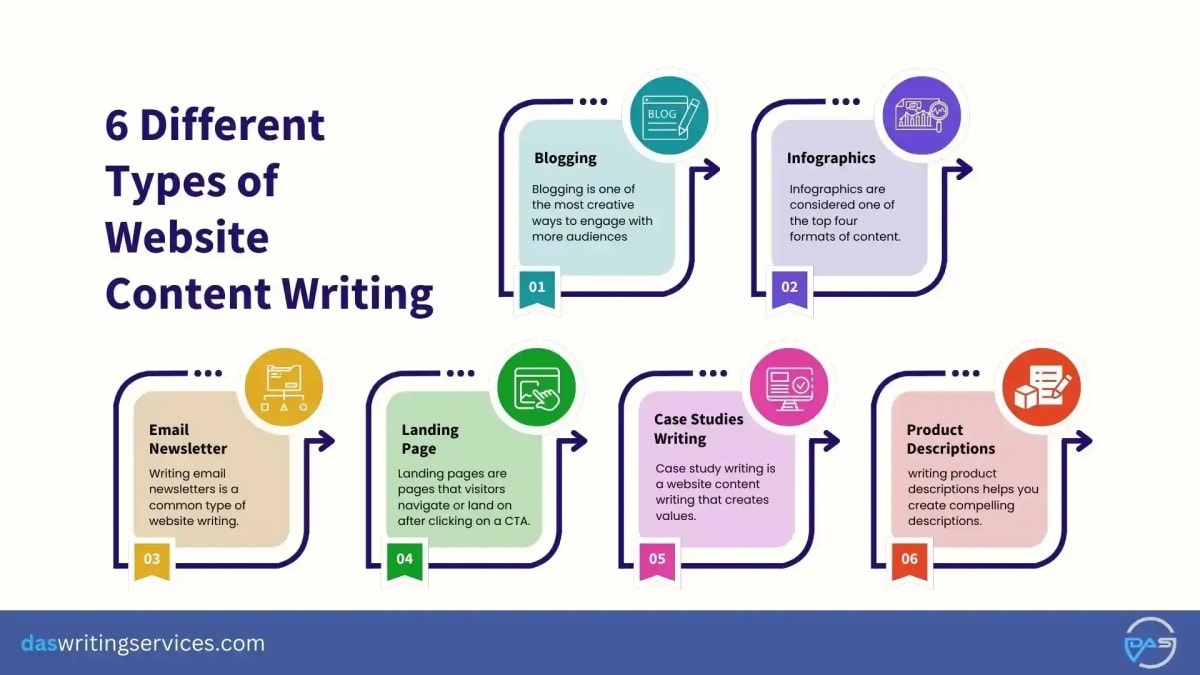
Writing website content is the strategic process of creating engaging, SEO-optimized text for web pages. It's about crafting everything from homepages to blogs to attract a target audience, communicate a brand's value, and drive specific actions like sales or sign-ups.
- Search Engine Optimization: This involves strategically using keywords and structuring your content so search engines can easily find and rank your pages higher in results.
- Audience-Centric Storytelling: Great content connects with your target audience by addressing their specific pain points and showing how your product offers the ideal solution.
- Clear Value Proposition: You've got to quickly communicate your unique value to keep visitors engaged, build trust, and prevent them from immediately leaving your site.
- Purposeful Calls-to-Action (CTAs): Every page should guide visitors toward a specific goal with strong CTAs that make the next step feel obvious and easy to take.
Who should use this: Businesses, marketers, and founders who need to build an online presence that attracts organic traffic, engages visitors, and converts them into loyal customers.
Your Website is Your Digital Handshake. Make it a Firm One.
Look, let's be real. Your website isn't just a URL; it's your digital front door. It’s the very first place potential customers, investors, and partners go to figure out who you are and what you’re all about. You get one shot—literally seconds—to make a powerful first impression. No pressure, right? The reality is, what you say and how you say it on your site can be the deciding factor between a new lead and a bounced user. answer killer website content
And when we say seconds, we mean it. It takes users about 50 milliseconds to form an opinion that determines whether they’ll stay or leave. That’s a literal blink of an eye. This snap judgment impacts everything: user trust, brand perception, and ultimately, your conversion rates. If your message is unclear, uninspired, or doesn't connect, they're gone. Forever. So, how do you make every millisecond count?
More Than Just Pretty Words on a Page
The answer is killer website content. But here's the thing—it’s not just about stringing together buzzwords or stuffing in keywords. Great content is a delicate dance. It must perfectly capture your unique brand voice, speak directly to the needs and pains of your target audience, and be meticulously optimized for SEO. It's a huge undertaking. It’s art and science combined.
This is where many businesses get stuck. You're busy running the actual company, maybe even trying to focus on big-picture goals like securing initial funding. Who has the time to become an expert content strategist overnight? You know you need a solid content strategy to grow organic traffic, but the execution feels like a mountain you just don't have the gear to climb. It’s a classic, frustrating bottleneck.
The Modern Toolkit for Content Creation
Thankfully, you don't have to climb that mountain alone anymore. The way we write website content has evolved dramatically. Today, AI-powered platforms are leveling the playing field, making it possible for teams of any size to produce high-caliber content efficiently. They act as a creative co-pilot, helping you brainstorm, draft, and refine your message without losing that essential human touch.
For instance, a platform like Copycrafted offers a full suite of AI-Powered Tools designed for this exact challenge. Instead of staring at a blank page, you can use its AI-Powered Content Creation capabilities to generate drafts, rewrite sections for a different tone, or ensure your copy aligns with SEO best practices from the start. It’s about working smarter, not just harder, to build a powerful online presence that truly represents your brand.
The bottom line? Creating exceptional website content is non-negotiable for growth. It’s the foundation of your digital marketing efforts. In this guide, we’ll break down exactly how to do it—from strategy to execution. We’ll give you actionable steps to turn your digital front door into your most powerful asset. And hey, if you want even more tips, our Company Blog is always there, or you can Contact Support with any questions. Let's get started.
Table of Contents
Ever landed on a website and felt completely lost? You know the feeling. You're clicking around, trying to find a simple piece of information, but you end up in a digital maze. The bottom line is, if users can't find what they need, they'll leave. That's why you need to meticulously structure your website content. Think of it as creating a table of contents for your entire site, guiding users effortlessly from one point to the next. Table Contents
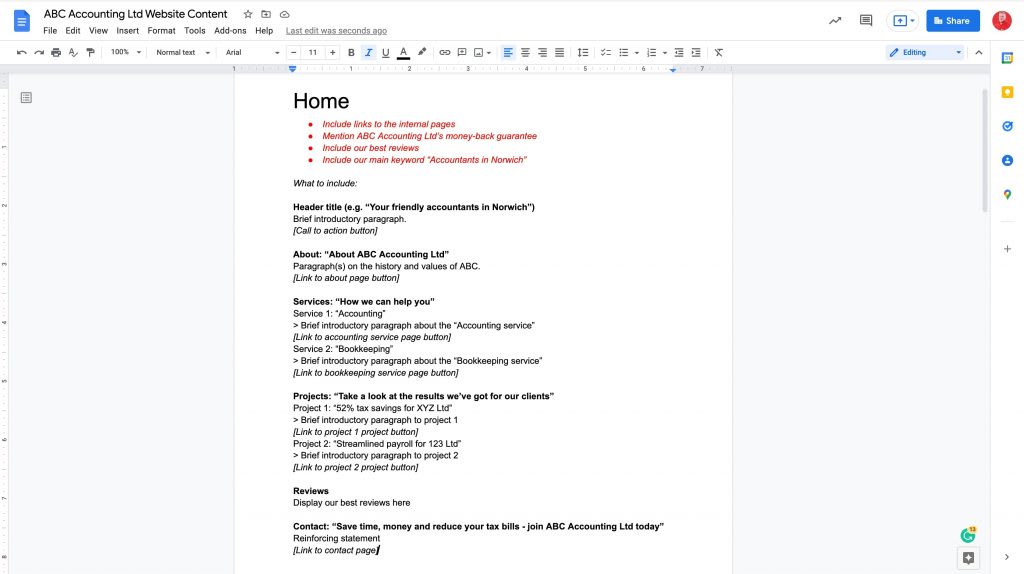
This isn't just about looking organized; it's about creating a better user experience and boosting your SEO. Search engines love well-structured sites because they're easier to crawl and understand. A logical flow tells Google exactly what your site is about and which pages are most important. It's a win-win for both humans and bots.
What is Information Architecture Anyway?
Okay, let's get into the nitty-gritty. The foundation of a great website structure is its Information architecture (IA). Don't let the fancy term scare you. IA is simply the practice of organizing and labeling content so that users can find what they need. It’s the blueprint for your entire digital space, defining how everything connects. It’s the difference between a messy garage and a perfectly organized workshop.
Good IA focuses on creating a clear user path. It anticipates what your visitors are looking for and designs the user journey to be as smooth as possible. You're not just throwing pages onto a site; you're thoughtfully arranging them to guide people toward their goals—and yours. A solid IA ensures your content is findable and makes sense in the grand scheme of things.
From Blueprint to Reality: Sitemap & Navigation
So, how do you turn that IA blueprint into something real? You start with a Sitemap. A sitemap is a visual representation of your website's structure, showing all your key pages and how they relate. It typically starts with your Homepage at the top and branches out to main categories, subcategories, and individual pages. It's your map for planning your content before you even write a single word.
Once you have your sitemap, you can build your intuitive navigation. This includes your main menu, footers, and internal links. Your Navigation is the set of signposts that people use to follow the paths you laid out in your sitemap. The goal is to make it so easy that people don't even have to think about it. Users are information foragers; they'll stick to a path if it provides value but will quickly leave if it doesn't.
Building Your Content Hierarchy
With your structure in place, it’s time to think about the content hierarchy on each page. This means using headings (H1, H2, H3) to break up your content and show its relative importance. A clear hierarchy makes your articles scannable for readers and helps search engines understand the main topics. A solid website content checklist should always include a review of your heading structure.
Actually creating all this structured content can feel daunting. This is where modern tools can be a huge help. For instance, platforms like copycrafted's AI-Powered Content Creation can help you generate high-quality text for all your key pages, from the Homepage to your Company Blog. Once your content is ready, features like Seamless Publishing can get it live on your site quickly, fitting perfectly into the structure you've planned. It streamlines the whole process, from planning to publishing.
Main Body Sections: The Heart of Your Website веб-сайтыңыздың жүрегі
Alright, let's get into the meat of it. The main body sections are where you do the heavy lifting. This is where you answer your visitors' questions, solve their problems, and guide them toward taking action. Think of your homepage, about page, and services page as your core trio. Each has a unique job, but they all work together. Writing compelling web content for these pages is non-negotiable.
Crafting Your Homepage: The First Impression
Your homepage is your digital storefront. It's the first handshake. You've got mere seconds to convince someone to stick around. Actually, it’s about 50 milliseconds for users to form a first opinion. No pressure, right? The most critical real estate is what visitors see without scrolling—the area known as "above the fold."
So, what needs to be there? Your value proposition, crystal clear. What do you do? Who is it for? Why should they care? Don't make them guess. Use a powerful headline, a supportive sub-headline, and a clear call-to-action (CTA). When you're crafting your homepage, focus on clarity over cleverness. If you're stuck, using an AI-Powered Content Creation platform like copycrafted can help you brainstorm dozens of headline options in minutes. It’s a great way to kickstart the creative process and ensure your message lands perfectly.
The About Us Page: More Than Just a History Lesson
Here's the thing: your About Us page isn't just a timeline of your company's founding. It's your chance to connect on a human level. This is where you tell your brand story. Why did you start this business? What are the values that drive your team? People buy from people they know, like, and trust. Your story builds that trust.
Don't just list facts. Weave a narrative. Introduce your team with personality. Share your mission with passion. This is pure storytelling, and it’s a powerful tool for building a loyal audience. The bottom line is to be authentic and let your brand's personality shine through. This is one area where SEO optimization is important, but connection is the primary goal.
Services & Products Page: From Features to Benefits
This is where you make the sale. But wait—don't just list what your product does. You need to translate every product feature to user benefit. Your customers don't really care that your software has "AI-driven algorithmic processing." They care that it "saves them 10 hours of work a week." See the difference? One is a feature; the other is a benefit.
Your job on the services page is to paint a picture of a better future for your customer. Show them how their life or work will improve with your solution. Use clear headings, bullet points for scannability, and strong visuals. To really nail this, you can use AI-Powered Tools to rephrase technical jargon into benefit-driven copy that resonates. And once that content is perfect, features like Seamless Publishing can get it live on your site without any hassle. The goal is to optimize for search engines while speaking directly to your user's needs.
Supporting Elements: The Unsung Heroes of Your Website
Okay, let's be real. You can have the most brilliant product and the slickest design, but if your website feels… off, people will leave. It’s that gut feeling. The reality is, your core content is just one part of the puzzle. The supporting elements are what turn a visitor into a customer. They’re the background characters that actually steal the show by building user trust and guiding users to act. These are essential elements of a successful website.
Think of it like this: your main content makes the promise, but these supporting elements provide the proof and the pathway. They're the handrails, the signposts, and the friendly reassurances that make a user’s journey smooth and confident. So, how do you get them right?
Show, Don't Just Tell: Trust Signals & Social Proof
Ever landed on a site and immediately felt confident enough to pull out your credit card? That wasn't an accident. It was a result of carefully placed trust signals. These are things like security badges, clear contact information, and professional design.
But the real powerhouse here is social proof. We're wired to follow the crowd. When we see that others have had a good experience, our own perceived risk drops. That's why customer testimonials are pure gold. They aren't just quotes; they're stories of success that potential customers can see themselves in. Displaying logos of companies you've worked with or showcasing user-generated content are other brilliant ways to show you're the real deal. It’s one thing for a company like copycrafted to say its AI-Powered Tools are revolutionary; it's another to see a testimonial from a marketer who tripled their output with them.
The Power of a Clear Ask: CTAs & Microcopy
You’ve convinced them you’re trustworthy. Now what? You need an effective call to action (CTA). This isn't the time to be vague. A weak CTA like "Learn More" often falls flat. Be specific and benefit-driven. "Start Creating for Free" or "Publish Your First Article in 5 Minutes" are much more compelling. They tell the user exactly what they get. Action-oriented language is key.
Don't forget the CTA's tiny-but-mighty sidekick: microcopy. This is the small text around buttons and forms that provides context and reassurance. Phrases like "No credit card required," "Cancel anytime," or "We'll never share your email" are perfect examples. This micro-level communication is fantastic for overcoming user objections right at the point of decision, which can seriously boost conversion rates. Good microcopy can make or break a user's experience.
Answering Questions Before They're Asked
Look, every potential customer has questions. And doubts. Your job is to address them head-on before they become a reason to leave. A dedicated FAQ section is your first line of defense. It’s a simple, organized way to tackle common concerns about pricing, features, or how your service works. Think of it as a silent salesperson, available 24/7.
For more complex topics, you can link from your FAQ to in-depth articles on your Company Blog. This not only provides value but also establishes your authority. And if a user *still* has a question? Make your Contact Support easy to find. Hiding your contact info is a massive red flag. Making it accessible shows you’re confident in your product and ready to help. It's a final, crucial trust signal that says, "We're here for you."
The Real-World ROI of AI in Your Content Workflow
Let's be honest. The theory behind AI is cool, but what you really care about is the practical value. How does an AI content generator actually save you time, make you money, and stop those content-creation headaches? It’s not about magic; it's about math. The time you save and the performance you gain directly impact your Return on Investment (ROI).
The reality is, a clunky, multi-step content creation workflow is a silent killer of productivity. We’re talking about jumping between documents, spreadsheets, and different apps just to get one blog post out the door. The goal is to find tools that help you achieve consistent business results without burning out your team. This is where AI steps in to fundamentally change the game.
Streamline Your Content Process from A to Z
Think about your current process. How many hours are spent just brainstorming, outlining, and writing a first draft? Now, imagine condensing that. An AI content generator isn't just about writing; it's about creating a hyper-efficient system. It helps you streamline your content process by handling the heavy lifting upfront.
Platforms like Copycrafted.ai integrate everything you need. You get a suite of tools to write website content, refine it with AI editors, and check it for SEO—all in one place. It's about moving fluidly from idea to published content without the friction. In fact, AI can boost business productivity by up to 40%. What would you do with that extra time?
Achieving Content at Scale Without the Quality Drop
Scaling content is a classic dilemma. You either hire more people (expensive) or you sacrifice quality (also expensive, just in a different way). This is where an AI-driven content marketing strategy becomes your secret weapon. You can generate a high volume of quality drafts for blogs, social media, and ads in a fraction of the time.
But wait—doesn't "at scale" mean generic? Not anymore. Modern platforms for AI-Powered Content Creation, such as Copycrafted.ai, are designed to learn your brand's voice. This allows you to produce content at scale that feels authentic and on-brand. You're not just churning out words; you're building a library of valuable assets that work for you around the clock.
| Stage | Traditional Approach | AI-Powered Approach (with Copycrafted.ai) |
|---|---|---|
| Idea Generation | Manual brainstorming, keyword research tools, team meetings. (Hours) | AI-driven topic suggestions and outline generation. (Minutes) |
| Drafting | Writer manually creates the first draft from scratch. (Days) | AI generates a comprehensive, structured draft in seconds. |
| Optimization | Separate SEO tools, manual editing for tone and clarity. | Integrated Content optimization for SEO and readability. |
| Publishing | Copy-pasting into a CMS, formatting, and scheduling. | Seamless Publishing feature for direct-to-CMS workflow. |
Measuring What Matters: Content Optimization and ROI
Creating content quickly is only half the battle. The real win is creating content that performs. The right AI-Powered Tools come with built-in Content optimization features. They can analyze your text for SEO keywords, suggest readability improvements, and help you align your content with what your audience is actually searching for. Better content gets better results. Simple.
The bottom line is that this all ties back to your Return on Investment (ROI). When you can produce more high-performing content in less time, your cost-per-piece plummets and your potential for traffic and conversions skyrockets. It becomes easier to measure content performance because you’re starting from a much stronger, data-informed position. And if you're ever stuck on how to track this, our Company Blog has plenty of guides. Still have questions? Our Contact Support team is here to help.
Key Takeaways
- Effective website content is crucial as users form an opinion in just 50 milliseconds, directly impacting brand trust and conversion rates.
- To write website content that converts, you must balance a unique brand voice with audience needs and meticulous SEO optimization.
- Use AI tools like Copycrafted's AI-Powered Content Creation to efficiently write website content that maintains an essential human touch.
- Optimize website content for SEO performance by implementing a clear Information Architecture (IA) with sitemaps and a logical heading hierarchy.
- Your homepage must present a crystal-clear value proposition, a powerful headline, and a distinct call-to-action (CTA) above the fold.
Frequently Asked Questions
What are the four key elements of strategic website content writing mentioned in the article?
The article outlines four core components for strategic website content. First is Search Engine Optimization (SEO) to rank higher in search results. Second is Audience-Centric Storytelling to connect with users' pain points. Third is a Clear Value Proposition to quickly communicate your unique value and build trust. Finally, every page needs Purposeful Calls-to-Action (CTAs) to guide visitors toward a specific goal, making the next step obvious and easy to take.
How quickly do users form a first impression of a website, and why is it so important?
According to the article, users form an opinion about a website in about 50 milliseconds—literally the blink of an eye. This snap judgment is critical because it directly impacts user trust, brand perception, and conversion rates. An unclear or uninspired message can cause a user to leave immediately, resulting in a lost lead. Your website is described as a 'digital front door,' and this first impression determines if someone stays or bounces.
What common bottleneck do businesses face when trying to write website content?
The article identifies a classic bottleneck where businesses struggle to find the time and expertise for content creation. Business owners are often focused on running the company and don't have the capacity to become expert content strategists overnight. Great content requires a difficult balance of capturing brand voice, addressing audience needs, and executing technical SEO. This combination of art and science feels like a mountain many businesses don't have the resources to climb on their own.
How can AI-powered platforms help businesses write website content more effectively?
AI-powered platforms act as a 'creative co-pilot' to streamline the content creation process. Instead of starting from a blank page, teams can use AI tools to brainstorm ideas, generate drafts, and refine their message. The article specifically mentions that a platform like Copycrafted can rewrite sections for a different tone or ensure the copy aligns with SEO best practices from the start. This allows teams of any size to produce high-caliber content efficiently and work smarter, not just harder.
What does the article mean when it says good content is 'more than just pretty words on a page'?
This phrase emphasizes that effective website content is not just about using buzzwords or stuffing keywords. The article explains it is a 'delicate dance' that must perfectly blend three key elements: capturing your unique brand voice, speaking directly to the needs and pains of your target audience, and being meticulously optimized for SEO. It is a strategic combination of both art and science, designed to build a powerful online presence that connects with users and drives business growth.